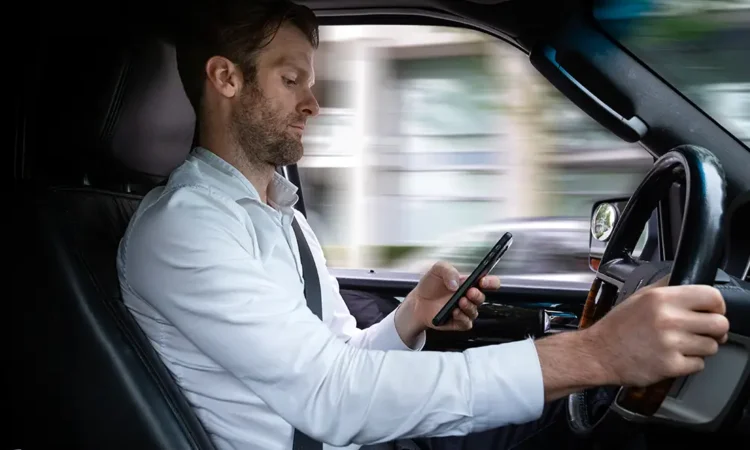
Distracted driving has become one of the leading causes of motor vehicle accidents in the United States. Distracted driving contributed to over 3,300 fatalities (NHTSA Distracted Driving Report) and an estimated 424,000 injuries in the most recent reporting year. Cell phone use, including texting, social media interaction, and app-based navigation, represents the most dangerous and prevalent form of distraction. The availability of phone records as evidence has created new opportunities for establishing liability in distracted driving cases.
Prevalence Data
At any given moment (NHTSA National Occupant Protection Use Survey) during daylight hours, approximately 3.1% of drivers are visually engaged with a handheld device. Among drivers aged 16 to 24, the rate increases to approximately 4.6%. These figures translate to hundreds of thousands of distracted drivers on the road at any given time.
The actual distraction rate is likely higher than observational surveys capture, as many forms of phone use, including voice-activated messaging, hands-free calls, and lap-level texting, are difficult for observers to detect. Insurance claim data suggests that phone use is a contributing factor in approximately 12% to 14% of all auto accidents, though this figure may understate the true proportion due to underreporting (Avian Law Group).
Phone Record Evidence
Cell phone records have become a powerful evidentiary tool in distracted driving litigation. Records obtained through subpoena can establish the precise timing of calls, text messages, and in some cases, app activity relative to the time of the accident. When phone records show that the at-fault driver was sending or receiving a text message within one to two minutes of the collision, this evidence strongly supports a distracted driving finding.
More granular data is available through forensic analysis of the phone itself. Digital forensic experts can extract detailed usage logs (International Association of Computer Investigative Specialists) showing app opens, screen activations, and GPS-based speed data that establishes whether the driver was actively using the phone while the vehicle was in motion. This level of detail is particularly valuable when carrier-level records are insufficient to establish the precise timing of phone activity.
Impact on Liability and Damages
Evidence of distracted driving significantly influences both liability determination and damage awards. In cases where phone records establish that the at-fault driver was actively using their phone at the time of the collision, comparative fault allocations to the plaintiff decrease by an average of 12 percentage points. Gross settlement values in proven distracted driving cases are approximately 20% higher than comparable cases without distraction evidence, reflecting jury and adjuster sensitivity to the perceived recklessness of phone use while driving.
In severe injury and wrongful death cases, evidence of distracted driving can support claims for punitive damages. California courts have recognized that texting while driving in certain circumstances can constitute the conscious disregard for safety necessary to support punitive damage awards, which are not subject to the same caps as compensatory damages.
Preserving the Evidence
Phone records and device data are subject to destruction through routine carrier retention policies and device replacement. Preservation letters should be sent to carriers and the at-fault driver immediately following an accident where phone distraction is suspected. Failure to preserve this evidence can eliminate the most impactful proof available in a distracted driving case.